
Join getAbstract to access the summary!

Doing the Right Things Right

Join getAbstract to access the summary!
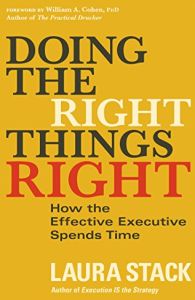
Doing the Right Things Right

How the Effective Executive Spends Time

Berrett-Koehler,

15 min read
10 take-aways
Audio & text

What's inside?

Productivity consultant Laura Stack offers how-to advice in this update of Peter Drucker’s 1967 classic, The Effective Executive.


Editorial Rating

9

getAbstract Rating

  • Applicable
  • Well Structured
  • For Beginners

Recommendation

In 1967, Peter Drucker, the father of modern management, published The Effective Executive: The Definitive Guide to Getting the Right Things Done. Drucker’s best-selling work, which codified business productivity, remains a revered, popular classic. Some of Drucker’s concepts, however, are more traditional than modern. Productivity consultant Laura Stack takes up where Drucker left off, offering a fresh perspective in her updated supplement to Drucker’s indispensable manual. She presents three “T’s” of leadership – “strategic thinking, team focus and tactical work” – as the organizing rubric for 12 critical management goals. Stack details why and how modern executives must operate in “efficient and effective” ways. getAbstract recommends her update to all executives – a category, she says, that includes anyone who makes important decisions.

Summary

“Efficient and Effective”

Today’s executives must operate effectively to achieve results and must use resources efficiently in reaching their goals. To attain these standards, executives should follow the credo: “Once you know you’re spending time on the right things…focus on doing them right.”

In his classic book The Effective Executive, Peter Drucker (1909-2005) listed necessary “habits of the mind” – or “effectiveness practices.” He advised knowing how to spend your time and controlling how you spend it, concentrating on results, leveraging your strengths, prioritizing work-related tasks and making results-oriented decisions.

To become and remain effective and efficient, executives should make 12 vital practices the core of their management approach. These 12 practices are organized according to the “3T leadership roles” of “strategic thinking, team focus” and “tactical work.”

Part I: Strategic Thinking

Strategic thinking calls for identifying your intended outcomes and planning your activities around achieving those goals. Take advantage of your organization’s structure while striving to improve it.

Strategic thinking...

About the Author

Laura Stack founded The Productivity Pro consultancy. Her other books include What To Do When There’s Too Much To Do and Execution Is the Strategy.


Comment on this summary

  • Avatar
  • Avatar
    S. Q. 1 year ago
    excellent
  • Avatar
    R. B. 1 year ago
    Excellent summary
  • Avatar
    D. P. 9 years ago


    The final paragraph from the abstract suggests the author of the abstract is still locked into 20th century culture. Maybe they should read the book! 'Long Hours, High Stress' is a sign of "Doing the Wrong things Wrong".

More on this topic

Related Skills

Lead Strategically
Advance Your Career
AI Transformation
Be Creative
Become a Self-Driven Learner
Career
Communicate Effectively
Develop a Business Plan
Develop Innovative Products
Develop Team Members
Develop Your Thinking Skills
Digital Transformation
Enable Digital Organization
Enhance Cybersecurity
Execute Digital Operations
Human Resources
Lead Ethically
Lead Operational Planning
Lead Yourself
Leverage AI in Your Daily Tasks
Manage Change
Manage Corporate Communications
Manage Learning and Development
Manage Teams and Departments
Marketing
Master Interpersonal Skills
Navigate Leadership Challenges
Plan and Strategize Your Sales
Promote Diversity, Equity, and Inclusion
Sales
Soft Skills
Strengthen Team Collaboration
Understand Organizations
Manage Internal Communication
Management
Become More Adaptable
Foster Collaboration
Shape Organizational Culture
Foster Ownership in Others
Build Psychological Safety
Implement Executive Coaching
Coach People
Apply Scrum
Champion New Ideas
Improve Team Performance
Enhance Team Agility
Adopt a Learning Habit
Drive Project Management
Understand Innovation
Workplace Skills
Practice Servant Leadership
Entrepreneurship
Practice Transformational Leadership
Foster Open Communication
Implement Agility
Manage Your Leadership Impact
Executive Leadership Case Studies
Manage Sales Teams
Lead Inclusively
Become More Productive
Build a Shared Vision
Facilitate Group Ideation
Maintain Work-Life Balance
Engage in Intrapreneurship
Create a Sense of Belonging
Foster a Culture of Innovation
Communicate Clearly
Define Purpose, Vision, and Mission
Lead through Change
Personal Growth
Leadership
Plan Strategically
Build and Maintain Well-Being
Enhance Employee Experience
Manage People and Talent
Use AI for Personal Productivity
Cultivate Positivity
Define Core Values
Communicate Strategically
Develop the Organization
Translate Strategy into Action
Cultivate a Growth Mindset
Cultivate Flexibility
Innovate Strategically
Improve Your Mental Health
Drive Organizational Performance
Motivate Yourself
Executive Leadership
Motivate Your Team
Live Intentionally
Communicate Transparently
Drive Team Performance
Leverage Ambidexterity
Build Team Cohesion
Pursue Excellence
Build Digital Culture
Master Prioritization
Promote Failure-tolerance
Build Security Culture
Manage Team Communication
Set Business Goals
Innovation
Embrace Change
Drive Employee Engagement
Live Well
Communicate Corporate Strategy
Foster Team Culture
Dare to be Vulnerable
Understand Motivation
Encourage Experimentation
Set and Achieve Goals
Think Strategically
Set Team Goals
Manage Your Time
Communicate Corporate Purpose